The property
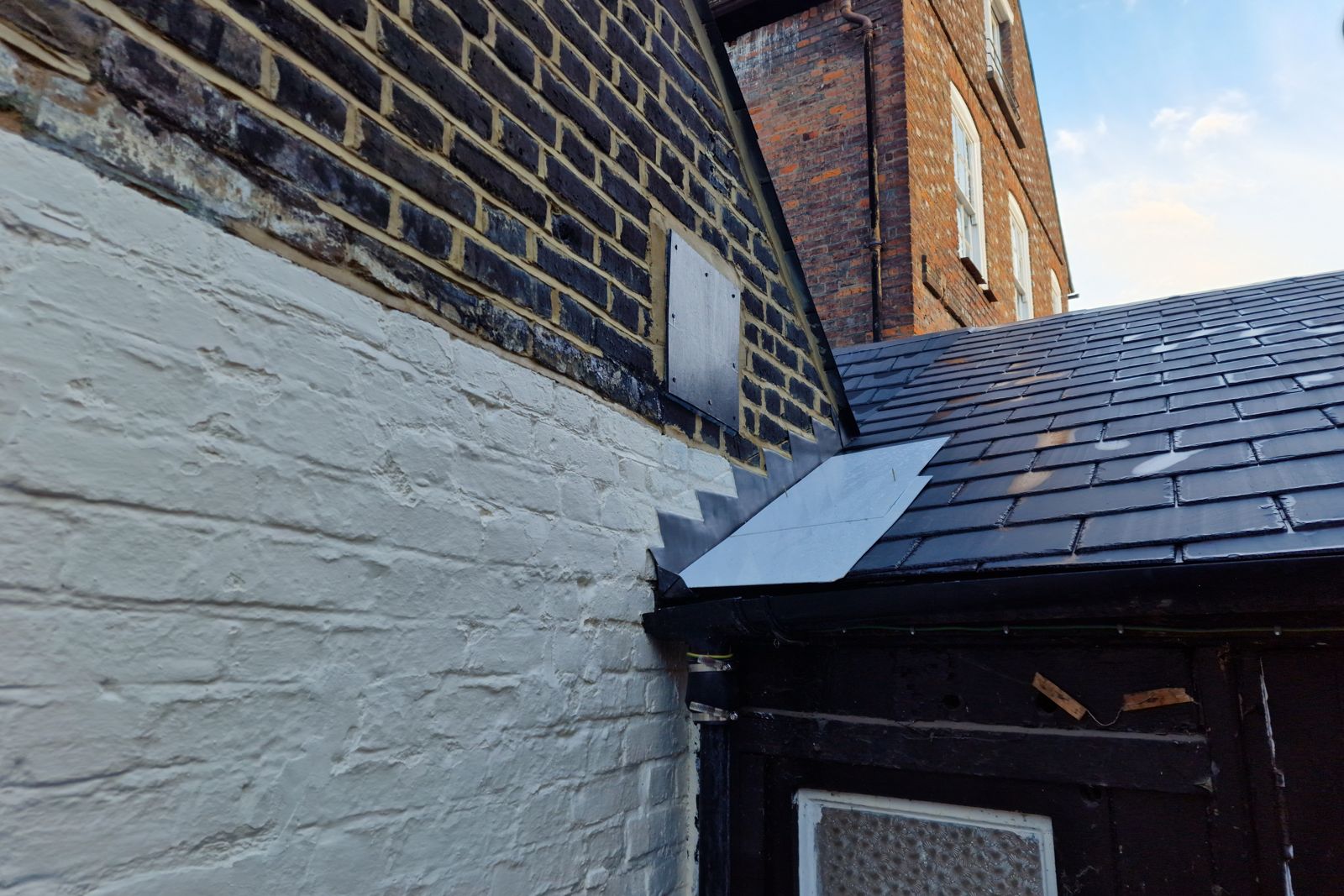
Part of a Grade I listed former town house of the mid seventeenth century on the high street of a historic Kent cathedral city, now in commercial use with flats above: half timbered with brick cladding, jettied upper floors and Kent tile roofs, restored in the Victorian era. Grade I listing places a building in the top 2.5 per cent of listed buildings in England, and every intervention answers to that.
The brief
The rear roof coverings had reached the end of their life and needed replacement. On a Grade I building there is no such thing as a simple roof job: the proposal needed Listed Building Consent, the justification needed to be argued in heritage terms, the materials and methods needed to respect the historic fabric, and the works then needed to be procured and administered to the standard the consent demanded.
What we did
- Heritage statementThe building’s significance assessed against its national list entry, and the proposals justified within national planning policy.
- Consent securedPursued through the local authority process to listed building consent, granted with conditions, with Avalon acting as agent.
- Traditional specificationIncluding hair lime lath and plaster repair using traditional materials and methods.
- Competitive tenderThe works tendered on a detailed schedule of works.
- Administered to completionConditions managed within the contract, reaching certified practical completion within the year of the consent.
On a Grade I building there is no such thing as a simple roof job.
The RICS standard and the legislation
Consent was obtained under the Planning (Listed Buildings and Conservation Areas) Act 1990, and the works were specified in line with the RICS guidance note Design and specification. Consent, specification, tender and contract administration together make up the end to end appointment described in the Building Surveyor Services schedule used with the RICS Standard Form of Consultant’s Appointment (April 2025 edition).
The outcome
The consent, the specification and the works stayed aligned from application to completion, with the full paper trail held on one file by one practice.