The site
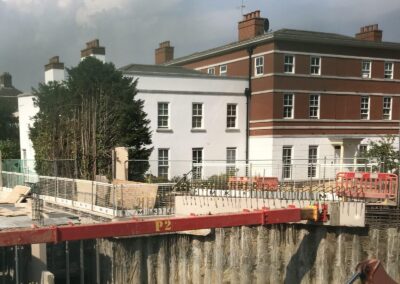
A Grade II listed seventeenth century former coaching inn in the East of England, with a proposed residential scheme structured as heritage-led enabling development to secure the long term future of the listed building.
The brief
The scheme’s working appraisal rested on a build cost assumption. Before land commitments and funding discussions went further, that assumption needed independent testing against evidence, across a range of density options, so the viability decision would be made on real numbers.
What we did
- Elemental cost plansPrepared to the RICS New Rules of Measurement at Level 3, at current prices adjusted for location.
- Four density optionsEach option costed, plus the completion works to the listed building itself.
- Dwelling by dwellingEach individually designed, high specification home costed on its own build up, not a blended rate.
- Finance appraisalDevelopment value, total costs, profit, margin, breakeven sensitivity and a cash flow with peak debt.
The RICS guidance
Cost planning follows NRM 1, the RICS rules for order of cost estimating and cost planning, which give the client a consistent, recognised basis for the budget and for tracking it as the design develops.
The finding
The evidence did not support the working assumption. The cost plans demonstrated build costs of more than double the appraised rate across every density option, compressing the margin below a prudent viability threshold. The appraisal said so plainly, and recommended the specification, values and land price be reviewed before commitment.
An appraisal that flatters a scheme costs its client the difference later, on site, with finance drawn.
Why this matters
Read more about our Cost Planning service.